Abstract
This paper describes a quantum programming environment, named $Q|SIångle$. It is a platform embedded in the .Net language that supports quantum programming using a quantum extension of the $mathbfwhile$-language. The framework of the platform includes a compiler of the quantum $mathbfwhile$-language and a suite of tools for simulating quantum computation, optimizing quantum circuits, and analyzing and verifying quantum programs. Throughout the paper, using $Q|SIn̊gle$ to simulate quantum behaviors on classical platforms with a combination of components is demonstrated. The scalable framework allows the user to program customized functions on the platform. The compiler works as the core of $Q|SIrg̊le$ bridging the gap from quantum hardware to quantum software. The built-in decomposition algorithms enable the universal quantum computation on the present quantum hardware.
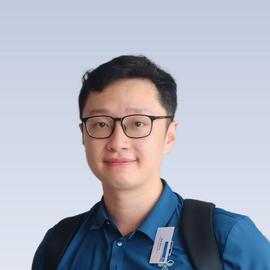
Xin Wang
Associate Professor
Prof. Xin Wang founded the QuAIR Lab at HKUST (Guangzhou) in June 2023. His research aims to advance our understanding of the limits of information processing with quantum systems and the potential of quantum artificial intelligence. His current interests include quantum algorithms, quantum resource theory, quantum machine learning, quantum computer architecture, and quantum error processing. Prior to establishing the QuAIR Lab, Prof. Wang was a Staff Researcher at the Institute for Quantum Computing at Baidu Research, where he focused on quantum computing research and the development of the Baidu Quantum Platform. Notably, he led the development of Paddle Quantum, a Python library for quantum machine learning. From 2018 to 2019, he was a Hartree Postdoctoral Fellow at the Joint Center for Quantum Information and Computer Science (QuICS) at the University of Maryland, College Park. Prof. Wang received his Ph.D. in quantum information from the University of Technology Sydney in 2018, under the supervision of Prof. Runyao Duan and Prof. Andreas Winter. He obtained his B.S. in mathematics (Wu Yuzhang Honors) from Sichuan University in 2014.