On the quantum no-signalling assisted zero-error classical simulation cost of non-commutative bipartite graphs
Abstract
© 2016 IEEE.Using one channel to simulate another exactly with the aid of quantum no-signalling correlations has been studied recently. The one-shot no-signalling assisted classical zero-error simulation cost of non-commutative bipartite graphs has been formulated as semidefinite programms [Duan and Winter, IEEE Trans. Inf. Theory 62, 891 (2016)]. Before our work, it was unknown whether the one-shot (or asymptotic) no-signalling assisted zero-error classical simulation cost for general non-commutative graphs is multiplicative (resp. additive) or not. In this paper we address these issues and give a general sufficient condition for the multiplicativity of the one-shot simulation cost and the additivity of the asymptotic simulation cost of non-commutative bipartite graphs, which include all known cases such as extremal graphs and classical-quantum graphs. Applying this condition, we exhibit a large class of so-called cheapest-full-rank graphs whose asymptotic zero-error simulation cost is given by the one-shot simulation cost. Finally, we disprove the multiplicativity of one-shot simulation cost by explicitly constructing a special class of qubit-qutrit non-commutative bipartite graphs.
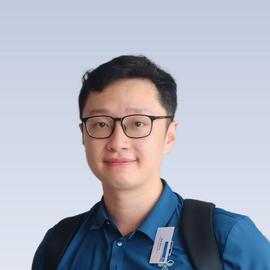
Xin Wang
Associate Professor
Prof. Xin Wang founded the QuAIR Lab at HKUST (Guangzhou) in June 2023. His research aims to advance our understanding of the limits of information processing with quantum systems and the potential of quantum artificial intelligence. His current interests include quantum algorithms, quantum resource theory, quantum machine learning, quantum computer architecture, and quantum error processing. Prior to establishing the QuAIR Lab, Prof. Wang was a Staff Researcher at the Institute for Quantum Computing at Baidu Research, where he focused on quantum computing research and the development of the Baidu Quantum Platform. Notably, he led the development of Paddle Quantum, a Python library for quantum machine learning. From 2018 to 2019, he was a Hartree Postdoctoral Fellow at the Joint Center for Quantum Information and Computer Science (QuICS) at the University of Maryland, College Park. Prof. Wang received his Ph.D. in quantum information from the University of Technology Sydney in 2018, under the supervision of Prof. Runyao Duan and Prof. Andreas Winter. He obtained his B.S. in mathematics (Wu Yuzhang Honors) from Sichuan University in 2014.