Abstract
We develop a general framework to assess capabilities and limitations of the Gaussian toolbox in continuous variable quantum information theory. Our framework allows us to characterize the structure and properties of quantum resource theories specialized to Gaussian states and Gaussian operations, establishing rigorous methods for their description and yielding a unified approach to their quantification. We show in particular that, under a few intuitive and physically motivated assumptions on the set of free states, no Gaussian quantum resource can be distilled with free Gaussian operations, even when an unlimited supply of the resource state is available. This places fundamental constraints on state manipulations in all such Gaussian resource theories. We discuss in particular the applications to quantum entanglement, where we extend previously known results by showing that Gaussian entanglement cannot be distilled even with Gaussian operations preserving the positivity of the partial transpose, as well as to other Gaussian resources such as steering and optical nonclassicality. A comprehensive semidefinite programming representation of all these resources is explicitly provided.
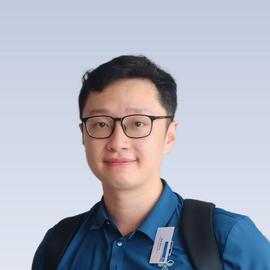
Xin Wang
Associate Professor
Prof. Xin Wang founded the QuAIR Lab at HKUST (Guangzhou) in June 2023. His research aims to advance our understanding of the limits of information processing with quantum systems and the potential of quantum artificial intelligence. His current interests include quantum algorithms, quantum resource theory, quantum machine learning, quantum computer architecture, and quantum error processing. Prior to establishing the QuAIR Lab, Prof. Wang was a Staff Researcher at the Institute for Quantum Computing at Baidu Research, where he focused on quantum computing research and the development of the Baidu Quantum Platform. Notably, he led the development of Paddle Quantum, a Python library for quantum machine learning. From 2018 to 2019, he was a Hartree Postdoctoral Fellow at the Joint Center for Quantum Information and Computer Science (QuICS) at the University of Maryland, College Park. Prof. Wang received his Ph.D. in quantum information from the University of Technology Sydney in 2018, under the supervision of Prof. Runyao Duan and Prof. Andreas Winter. He obtained his B.S. in mathematics (Wu Yuzhang Honors) from Sichuan University in 2014.