Tripartite-to-Bipartite Entanglement Transformation by Stochastic Local Operations and Classical Communication and the Structure of Matrix Spaces
Abstract
We study the problem of transforming a tripartite state to a bipartite one using stochastic local operations and classical communication (SLOCC). It is known that the one-shot tripartite-to-bipartite SLOCC convertibility is completely determined by the maximal Schmidt rank of the given tripartite state, i.e. the largest Schmidt rank of those bipartite states lying in the range of the reduced density operator. In this paper, we obtain results in tripartite-to-bipartite entanglement transformation, in both finite and asymptotic settings, by studying properties of the maximal Schmidt rank. In the finite setting, we first show that the maximal Schmidt rank is super-multiplicative, i.e., the maximal Schmidt rank of two copies of a given state can be strictly larger than the square of its maximal Schmidt rank. We then provide a complete characterization of those tripartite states satisfying this property. Note that such tripartite states admit advantages in tripartite-to-bipartite SLOCC transformation when multiple copies are supplied. In the asymptotic setting, we introduce the asymptotic maximal Schmidt rank of a tri- partite state, which can be understood as the largest possible Schmidt rank one can obtain from a single copy of the given tripartite state under SLOCC, asymptotically. We first compute the asymptotic maximal Schmidt rank for a large family of tripartite states explicitly. Then, combined with certain powerful results from invariant theory, we exhibit a sufficient and necessary condition to determine whether a single copy of a given tripartite state can be transformed to the bipartite maximally entangled state under SLOCC, in this asymptotic setting. Thanks to the recent progress on the non-commutative rank problem, our condition can be verified in deterministic polynomial time.
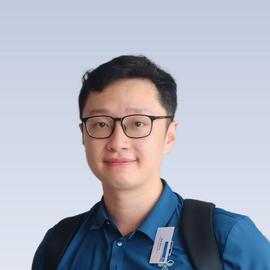
Xin Wang
Associate Professor
Prof. Xin Wang founded the QuAIR Lab at HKUST (Guangzhou) in June 2023. His research aims to advance our understanding of the limits of information processing with quantum systems and the potential of quantum artificial intelligence. His current interests include quantum algorithms, quantum resource theory, quantum machine learning, quantum computer architecture, and quantum error processing. Prior to establishing the QuAIR Lab, Prof. Wang was a Staff Researcher at the Institute for Quantum Computing at Baidu Research, where he focused on quantum computing research and the development of the Baidu Quantum Platform. Notably, he led the development of Paddle Quantum, a Python library for quantum machine learning. From 2018 to 2019, he was a Hartree Postdoctoral Fellow at the Joint Center for Quantum Information and Computer Science (QuICS) at the University of Maryland, College Park. Prof. Wang received his Ph.D. in quantum information from the University of Technology Sydney in 2018, under the supervision of Prof. Runyao Duan and Prof. Andreas Winter. He obtained his B.S. in mathematics (Wu Yuzhang Honors) from Sichuan University in 2014.