Indistinguishability of bipartite states by positive-partial-transpose operations in the many-copy scenario
Abstract
A bipartite subspace $S$ is called strongly positive-partial-transpose-unextendible (PPT-unextendible) if for every positive integer $k$, there is no PPT operator supporting on the orthogonal complement of $S^øtimes k$. We show that a subspace is strongly PPT-unextendible if it contains a PPT-definite operator (a positive semidefinite operator whose partial transpose is positive definite). Based on these, we are able to propose a simple criterion for verifying whether a set of bipartite orthogonal quantum states is indistinguishable by PPT operations in the many copy scenario. Utilizing this criterion, we further point out that any entangled pure state and its orthogonal complement cannot be distinguished by PPT operations in the many copy scenario. On the other hand, we investigate that the minimum dimension of strongly PPT-unextendible subspaces in an $møtimes n$ system is $m+n-1$, which involves a generalization of the result that non-positive-partial-transpose (NPT) subspaces can be as large as any entangled subspace [N. Johnston, Phys. Rev. A 87: 064302 (2013)].
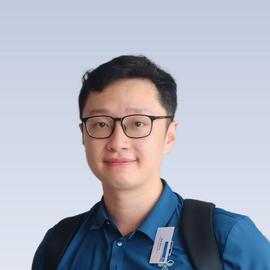
Xin Wang
Associate Professor
Prof. Xin Wang founded the QuAIR Lab at HKUST (Guangzhou) in June 2023. His research aims to advance our understanding of the limits of information processing with quantum systems and the potential of quantum artificial intelligence. His current interests include quantum algorithms, quantum resource theory, quantum machine learning, quantum computer architecture, and quantum error processing. Prior to establishing the QuAIR Lab, Prof. Wang was a Staff Researcher at the Institute for Quantum Computing at Baidu Research, where he focused on quantum computing research and the development of the Baidu Quantum Platform. Notably, he led the development of Paddle Quantum, a Python library for quantum machine learning. From 2018 to 2019, he was a Hartree Postdoctoral Fellow at the Joint Center for Quantum Information and Computer Science (QuICS) at the University of Maryland, College Park. Prof. Wang received his Ph.D. in quantum information from the University of Technology Sydney in 2018, under the supervision of Prof. Runyao Duan and Prof. Andreas Winter. He obtained his B.S. in mathematics (Wu Yuzhang Honors) from Sichuan University in 2014.