Abstract
A paradigmatic algorithm for online learning is the Hedge algorithm by Freund and Schapire. An allocation into different strategies is chosen for multiple rounds and each round incurs corresponding losses for each strategy. The algorithm obtains a favorable guarantee for the total losses even in an adversarial situation. This work presents quantum algorithms for such online learning in an oracular setting. For T time steps and N strategies, we exhibit run times of about Opoly(T)N for estimating the losses and for betting on individual strategies by sampling. In addition, we discuss a quantum analog of the Sparsitron, a machine learning algorithm based on the Hedge algorithm. The quantum algorithm inherits the provable learning guarantees from the classical algorithm and exhibits polynomial speedups. The speedups may find relevance in finance, for example, for hedging risks, and machine learning, for example, for learning generalized linear models or Ising models.
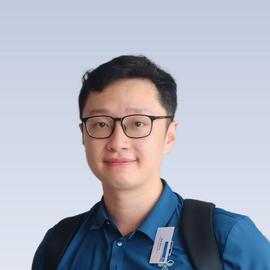
Xin Wang
Associate Professor
Prof. Xin Wang founded the QuAIR Lab at HKUST (Guangzhou) in June 2023. His research aims to advance our understanding of the limits of information processing with quantum systems and the potential of quantum artificial intelligence. His current interests include quantum algorithms, quantum resource theory, quantum machine learning, quantum computer architecture, and quantum error processing. Prior to establishing the QuAIR Lab, Prof. Wang was a Staff Researcher at the Institute for Quantum Computing at Baidu Research, where he focused on quantum computing research and the development of the Baidu Quantum Platform. Notably, he led the development of Paddle Quantum, a Python library for quantum machine learning. From 2018 to 2019, he was a Hartree Postdoctoral Fellow at the Joint Center for Quantum Information and Computer Science (QuICS) at the University of Maryland, College Park. Prof. Wang received his Ph.D. in quantum information from the University of Technology Sydney in 2018, under the supervision of Prof. Runyao Duan and Prof. Andreas Winter. He obtained his B.S. in mathematics (Wu Yuzhang Honors) from Sichuan University in 2014.