Abstract
The quantum capacity of a noisy quantum channel determines the maximal rate at which we can code reliably over asymptotically many uses of the channel, and it characterizes the channel’s ultimate ability to transmit quantum information coherently. In this paper, we derive single-letter upper bounds on the quantum and private capacities of quantum channels. The quantum capacity of a quantum channel is always no larger than the quantum capacity of its extended channels since the extensions of the channel can be considered as assistance from the environment. By optimizing the parametrized extended channels with specific structures such as the flag structure, we obtain new upper bounds on the quantum capacity of the original quantum channel. Furthermore, we extend our approach to estimating the fundamental limits of private communication and one-way entanglement distillation. As notable applications, we establish improved upper bounds to the quantum and private capacities for fundamental quantum channels of great interest in quantum information, some of which are also the sources of noise in superconducting quantum computing. In particular, our upper bounds on the quantum capacities of the depolarizing channel and the generalized amplitude damping channel are strictly better than previously best-known bounds.
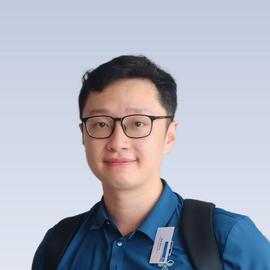
Xin Wang
Associate Professor
Prof. Xin Wang founded the QuAIR Lab at HKUST (Guangzhou) in June 2023. His research aims to advance our understanding of the limits of information processing with quantum systems and the potential of quantum artificial intelligence. His current interests include quantum algorithms, quantum resource theory, quantum machine learning, quantum computer architecture, and quantum error processing. Prior to establishing the QuAIR Lab, Prof. Wang was a Staff Researcher at the Institute for Quantum Computing at Baidu Research, where he focused on quantum computing research and the development of the Baidu Quantum Platform. Notably, he led the development of Paddle Quantum, a Python library for quantum machine learning. From 2018 to 2019, he was a Hartree Postdoctoral Fellow at the Joint Center for Quantum Information and Computer Science (QuICS) at the University of Maryland, College Park. Prof. Wang received his Ph.D. in quantum information from the University of Technology Sydney in 2018, under the supervision of Prof. Runyao Duan and Prof. Andreas Winter. He obtained his B.S. in mathematics (Wu Yuzhang Honors) from Sichuan University in 2014.