Abstract
Quantum entanglement is a key physical resource in quantum information processing that allows for performing basic quantum tasks such as teleportation and quantum key distribution, which are impossible in the classical world. Ever since the rise of quantum information theory, it has been an open problem to quantify entanglement in an information-theoretically meaningful way. In particular, every previously defined entanglement measure bearing a precise information-theoretic meaning is not known to be efficiently computable, or if it is efficiently computable, then it is not known to have a precise information-theoretic meaning. In this Letter, we meet this challenge by introducing an entanglement measure that has a precise information-theoretic meaning as the exact cost required to prepare an entangled state when two distant parties are allowed to perform quantum operations that completely preserve the positivity of the partial transpose. Additionally, this entanglement measure is efficiently computable by means of a semidefinite program, and it bears a number of useful properties such as additivity and faithfulness. Our results bring key insights into the fundamental entanglement structure of arbitrary quantum states, and they can be used directly to assess and quantify the entanglement produced in quantum-physical experiments.
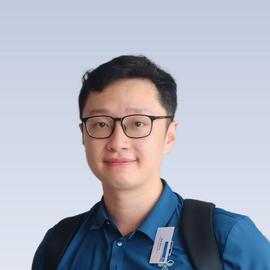
Xin Wang
Associate Professor
Prof. Xin Wang founded the QuAIR Lab at HKUST (Guangzhou) in June 2023. His research aims to advance our understanding of the limits of information processing with quantum systems and the potential of quantum artificial intelligence. His current interests include quantum algorithms, quantum resource theory, quantum machine learning, quantum computer architecture, and quantum error processing. Prior to establishing the QuAIR Lab, Prof. Wang was a Staff Researcher at the Institute for Quantum Computing at Baidu Research, where he focused on quantum computing research and the development of the Baidu Quantum Platform. Notably, he led the development of Paddle Quantum, a Python library for quantum machine learning. From 2018 to 2019, he was a Hartree Postdoctoral Fellow at the Joint Center for Quantum Information and Computer Science (QuICS) at the University of Maryland, College Park. Prof. Wang received his Ph.D. in quantum information from the University of Technology Sydney in 2018, under the supervision of Prof. Runyao Duan and Prof. Andreas Winter. He obtained his B.S. in mathematics (Wu Yuzhang Honors) from Sichuan University in 2014.