Activated zero-error classical communication over quantum channels assisted with quantum no-signalling correlations
Abstract
We study the activated quantum no-signalling-assisted zero-error classical capacity by first allowing the assistance from some noiseless forward communication channel and later paying back the cost of the helper. This activated communication model considers the additional forward noiseless channel as a catalyst for communication. First, we show that the one-shot activated capacity can be formulated as a semidefinite program and we derive a number of striking properties of this capacity. We further present a sufficient condition under which a noisy channel can be activated. Second, we show that one-bit noiseless classical communication is able to fully activate any classical-quantum channel to achieve its asymptotic capacity, or the semidefinite (or fractional) packing number. Third, we prove that the asymptotic activated capacity cannot exceed the original asymptotic capacity of any quantum channel. We also show that the asymptotic no-signalling-assisted zero-error capacity does not equal to the semidefinite packing number for quantum channels, which differs from the case of classical-quantum channels.
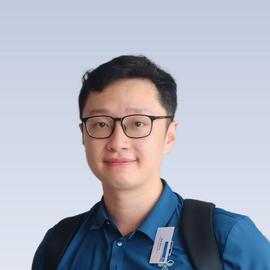
Xin Wang
Associate Professor
Prof. Xin Wang founded the QuAIR Lab at HKUST (Guangzhou) in June 2023. His research aims to advance our understanding of the limits of information processing with quantum systems and the potential of quantum artificial intelligence. His current interests include quantum algorithms, quantum resource theory, quantum machine learning, quantum computer architecture, and quantum error processing. Prior to establishing the QuAIR Lab, Prof. Wang was a Staff Researcher at the Institute for Quantum Computing at Baidu Research, where he focused on quantum computing research and the development of the Baidu Quantum Platform. Notably, he led the development of Paddle Quantum, a Python library for quantum machine learning. From 2018 to 2019, he was a Hartree Postdoctoral Fellow at the Joint Center for Quantum Information and Computer Science (QuICS) at the University of Maryland, College Park. Prof. Wang received his Ph.D. in quantum information from the University of Technology Sydney in 2018, under the supervision of Prof. Runyao Duan and Prof. Andreas Winter. He obtained his B.S. in mathematics (Wu Yuzhang Honors) from Sichuan University in 2014.