Wang Research Group
Wang Research Group
News
People
Publications
Software
Join us
Teaching
Contact
Light
Dark
Automatic
Quantum state discrimination
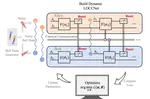
Dynamic local operations and classical communication for automated entanglement manipulation
Distributed quantum computing offers a promising pathway to overcome the limitations of individual quantum processors by connecting …
Xia Liu
,
Jiayi Zhao
,
Benchi Zhao
,
Xin Wang
PDF
Cite
DOI
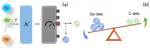
Quantum coherence and distinguishability as complementary resources: A resource-theoretic perspective from wave-particle duality
Wave-particle duality, a fundamental principle of quantum mechanics, encapsulates the complementary relationship between the wave and …
Zhiping Liu
,
Chengkai Zhu
,
Hua-Lei Yin
,
Xin Wang
PDF
Cite
DOI
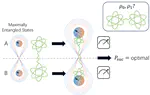
Entanglement cost of discriminating quantum states under locality constraints
The unique features of entanglement and non-locality in quantum systems, where there are pairs of bipartite states perfectly …
Chenghong Zhu
,
Chengkai Zhu
,
Zhiping Liu
,
Xin Wang
PDF
Cite
DOI
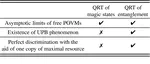
Limitations of Classically Simulable Measurements for Quantum State Discrimination
In the realm of fault-tolerant quantum computing, stabilizer operations play a pivotal role, characterized by their remarkable …
Chengkai Zhu
,
Zhiping Liu
,
Chenghong Zhu
,
Xin Wang
PDF
Cite
DOI
Symmetric distinguishability as a quantum resource
We develop a resource theory of symmetric distinguishability, the fundamental objects of which are elementary quantum information …
Robert Salzmann
,
Nilanjana Datta
,
Gilad Gour
,
Xin Wang
,
Mark M. Wilde
PDF
Cite
DOI
Resource theory of asymmetric distinguishability
This paper systematically develops the resource theory of asymmetric distinguishability, as initiated roughly a decade ago [K. …
Xin Wang
,
Mark M. Wilde
PDF
Cite
DOI
Indistinguishability of bipartite states by positive-partial-transpose operations in the many-copy scenario
A bipartite subspace $S$ is called strongly positive-partial-transpose-unextendible (PPT-unextendible) if for every positive integer …
Yinan Li
,
Xin Wang
,
Runyao Duan
PDF
Cite
DOI
Cite
×